Introduction
Mental Practice
You play because you hear—not the other way around. At its foundation, piano practice is mental practice: the ability to link sound imagination to physical execution.
- Volume
- Introduction · Orientation
- Foundation
- Mental practice
About mental practice
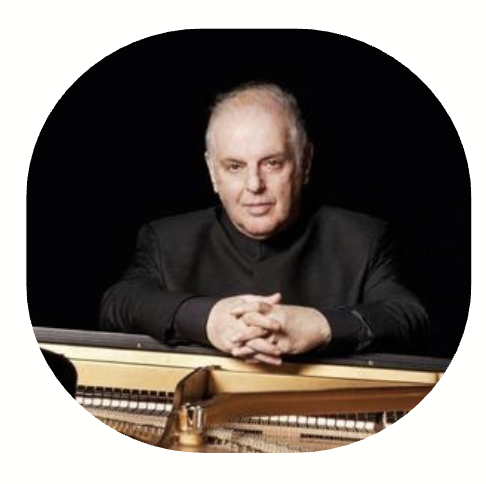
I never play a single note when my concentration is no longer at its height, for to do so would be to fall into the trap of playing mechanically
You play because you hear—not the other way around.
As long as there’s a lack of clarity around each note—its phrasing, form, harmony, dynamics, voicing, timing, or even motion—you remain locked in the same mental framework. And that framework will be echoed in your playing.
Liszt once said, “Think ten times, play once.” His advice points to something essential: if you cannot play the music clearly in your mind, you will never feel truly at ease at the keyboard.
At its foundation, piano practice is mental practice. Without that foundation, repetition becomes empty. Over time, inconsistent or unfocused practice doesn’t just fail to help—it becomes counterproductive. In some cases, it leads to physical injury. In others, to emotional burnout.
You may be used to practicing for eight hours a day, relying mostly on muscle memory while letting your mind wander. If so, the shift to mindful, concentrated practice may feel difficult at first—perhaps even overwhelming. Holding your attention steady as you work through specific goals is not automatic. It’s a skill in itself.
At first, you might find you can only sustain deep focus for ten minutes at a time. That’s natural. But with patience, consistency, and self-compassion, your ability to concentrate will expand.
The most effective practice rarely exceeds two to three hours a day. That’s about as long as the mind can remain fully engaged.
And when your learning is guided by analysis and mental clarity, you’ll begin to see how little time it actually takes to prepare a piece. There will no longer be any need to practice for eight hours a day. I promise.
About sound imagination
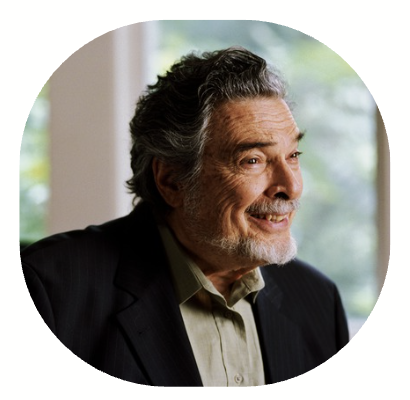
Technique is the ability to produce what you want. The presupposition is that you want something. So before going to the piano and practicing, training your muscles which is a waste of time [...] because it’s not in the muscles, it’s in the brain, it’s in the inner ear. Artur Schnabel used to say it - ‘Hear before you play. If you play before you hear what you’re going for, it’s an accident, and everything is built then on an accident’. So, want something, hear it, go for it
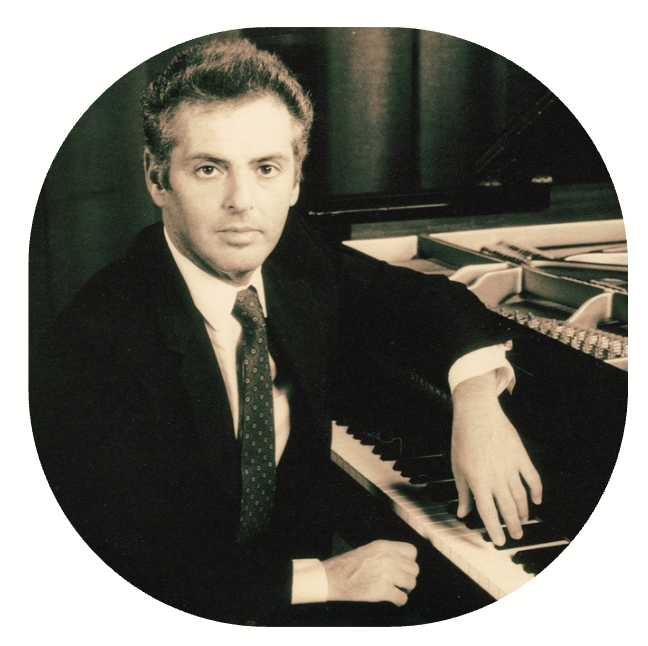
If you have in your ear the sound of the oboes, or the sound of the violin, or the sound of the chorus, or the sound of the flute [...] it doesn’t have to be that hard Beethoven’s orchestra [...] the mere fact that you have that in your ear, and you have that sensitivity and the understanding of how that flute sounds in that register, will allow you - if you have the necessary manual control - to produce a sound that is much more interesting and more imaginative than the sound that is produced by simply bringing the keys down.
Over the past decade, a quiet shift has begun to take place among pianists: a recognition that not all technical challenges arise from inefficient hand motion, weak fingers, or a lack of practice hours. There seems to be another element—subtle, yet essential—that traditional teaching has often overlooked: the imagination.
It is the imagination that shapes new neural pathways, directly influencing how our muscles respond, behave, and ultimately perform.
Seen through this lens, mental practice begins to reveal itself not as an accessory to physical training, but as a foundational part of piano technique—one that remains, for many, largely underdeveloped.
While the idea of “practicing in your mind” or visualizing your playing is frequently mentioned, it is rarely accompanied by clear, practical guidance. What exactly should be imagined? How does that mental image translate into movement, tone, or control?
So what exactly is mental practice?
Mental practice is the ability to visualize the musical score with precision—internally, in the mind’s ear and eye. It goes far beyond simply recalling a melody or sensing the overall mood of a piece.
It involves forming a clear and detailed mental image of every note—even within complex, polyphonic textures. Each note is imagined with specific qualities: tone color, harmonic and dynamics nuance, motion, and voicing.
At its core, mental practice is the act of linking sound imagination to physical execution. The hands are no longer the source of expression—they become the bridge between inner intention and the keyboard. When sound is clearly imagined, tone production follows naturally. Technique becomes the physical reflection of mental clarity.
About intonation
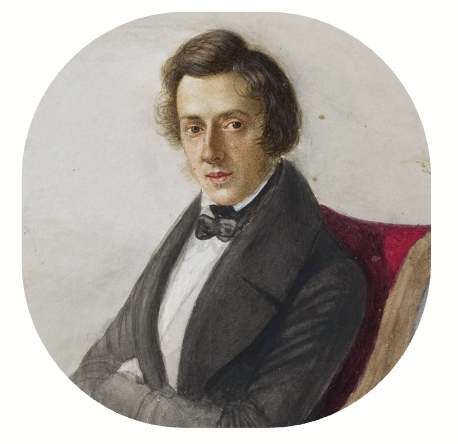
You must sing if you wish to play
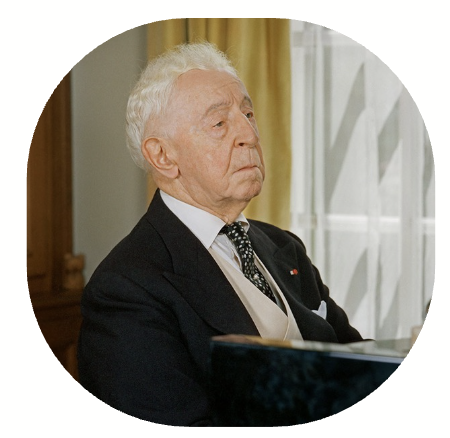
I tell the young people ‘Sing! Sing inside’. You have no voice - that doesn’t matter. The best voice - if you feel singing in you.
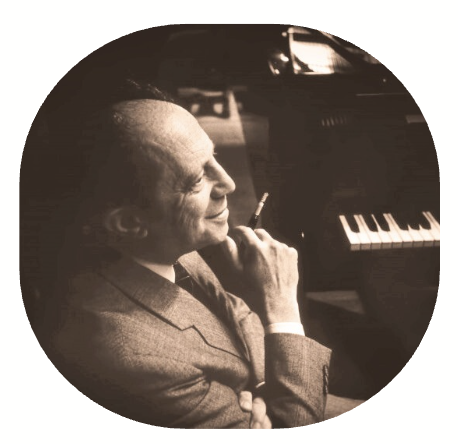
When you control things you play then you can create the illusion of playing a glissando on the piano [...] then you dream every note between the notes. That is kind of a hypnotic thing, because people are going to hear those glissandos, if you do hear it. They will say themselves that it doesn’t exist, you can not play glissando on the piano. But somehow I hear it, from where I sit it sounds like a glissando. It will be like a rainbow: the rainbow doesn’t exist, the rainbow exists only where you are.
Mental practice is the ability to feel and create music between the notes. Creating music between notes by training inner singing is the gateway to expressing arm weight, articulations, dynamics, phrasing, character and the form of the music, as well as confident energy when performing on stage.
About phrasing and form
All this should be better structured. I think the more a piece of music has many different characters, colours and attributes, the more it’s important to think of it strategically. In other words, to know that because of this and that I am going here. So you never find yourself in the situation where suddenly you are manipulated by the music. When you have a clear, new beginning of a sequence, like when you write and you start a new paragraph, it has to be very clearly enunciated.
Mental practice is also about mastering the ability to identify structure within a piece. That’s to say, the length and contour of motifs, phrases, sentences and elements of form. Mental practice is also about feeling the different levels of energy in each section of music. Nurturing this ability to create, feel and express different colours and intensity of energy is generally something that has been missing in piano training. Instead, it has often been replaced with confusing advice to play with more emotional intensity which in turn creates compulsive tension in body and mind.
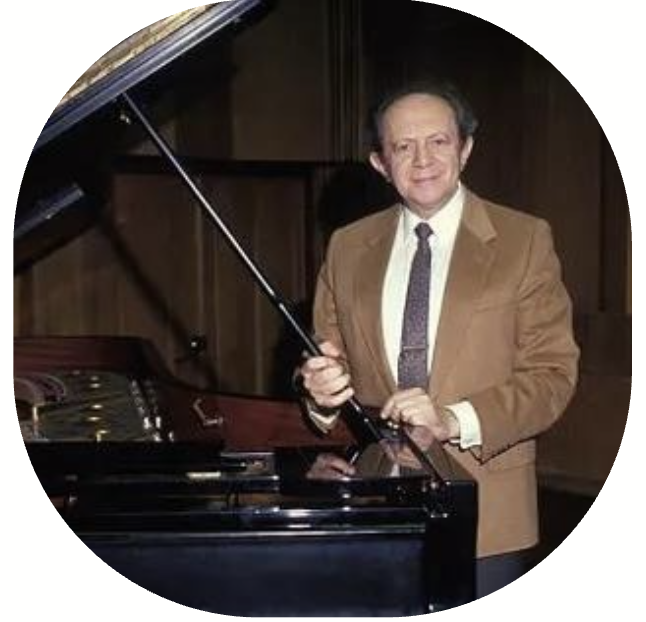
The next step would be not to phrase in a childish way. Child phrases are short. Like children recite poetry. Instead of separating the phrases, now connect them.
About inner pulse
Sometimes I am missing a pulse. You have the beginning element, which even though it is pianissimo and it’s only an arpeggio, it must have already a substance. There is a basic pulse which you can alter as the music requires, but I think if you find it in a strict sense than all the expressivity will be even stronger.
Mental practice is the simple ability to choose and feel the correct pulse throughout a piece and being able to ‘pull and push’ timing without losing the heartbeat of the music.
About hand motion
You think that you have to play the piano with your fingers. That’s a big mistake. You play the piano with your hand. That [playing with fingers] is very difficult, it’s like driving the car very fast in first gear. So switch gear. Playing the piano has to have some kind of dynamic feeling, The motion of the music has it, it has the same kind of dynamic feeling like things moving in space [...] like the wind blowing, coming and turning.
Related Lessons